A runway show may last twelve minutes. The content can last twelve months.
That is the real power of Fashion Week marketing. The clothes matter, obviously. But the modern show is also a content engine built to produce images, reactions, celebrity moments, creator commentary, behind-the-scenes clips, trend predictions, and enough debate to keep a collection alive long after the final walk.

The Show Starts Before the First Look
Fashion brands do not wait for the runway to begin marketing. Invitations become social posts. Venue clues create speculation. Fittings, casting, mood boards, and arrival shots build a story before the audience sees one complete outfit.
This creates anticipation without revealing everything. The brand gives people fragments, and people begin assembling the meaning themselves.
✦ Marketing Tip: Treat the launch date as the center of a content timeline, not the beginning of it.
The September 2026 calendar moves through New York, London, Milan, and Paris, giving fashion media and audiences a continuous sequence of moments to follow. The CFDA Fashion Calendar is a useful source for official New York scheduling.
One Show Creates Many Stories
The smartest runway production is designed for multiple audiences. Editors need collection images and designer context. Creators need visual moments they can interpret. Customers want details, styling ideas, and a reason to care. Fans want celebrities, emotion, and something surprising enough to share.
One dramatic coat can become the campaign image, a close-up Reel, a styling carousel, a creator reaction, a trend article, and a product waitlist. The brand is not repeating the same content. It is changing the angle while protecting the central idea.
That is also why the front row matters. A celebrity arrival can reach people who would never watch the full show. The cultural conversation becomes an entry point to the collection.
The Audience Helps Distribute the Show
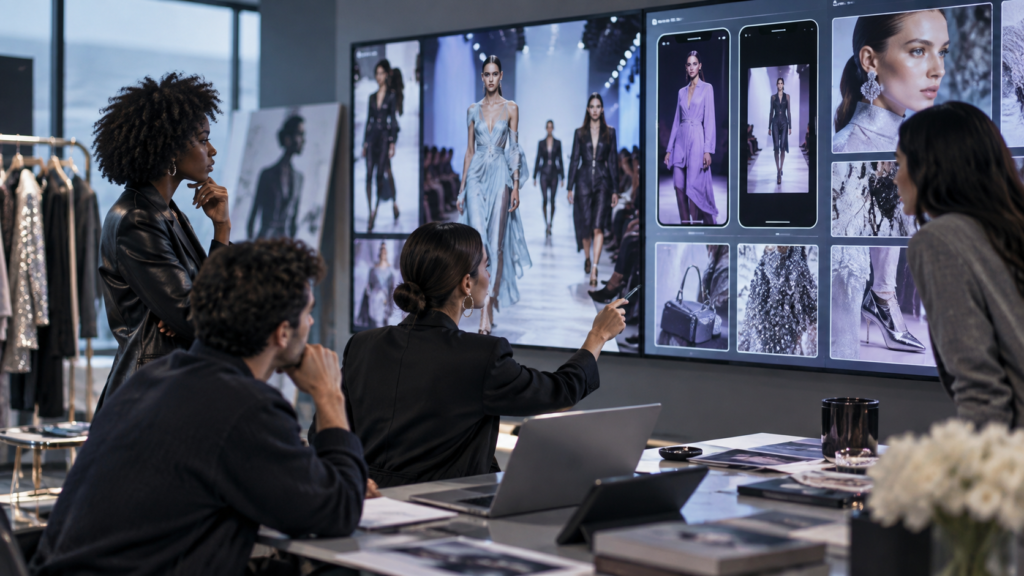
Fashion Week used to feel protected by physical access. Social platforms changed that. Livestreams, phone footage, instant reviews, and reaction content allow audiences to experience the show through many perspectives at once.
The result is a useful tension: exclusivity creates desire, while digital distribution creates scale. Brands give a limited group physical access but allow millions of people to participate in the interpretation.
This is similar to the way award shows build campaigns around live cultural moments. The event is only one layer. The real marketing value comes from everything people say, post, remix, and remember around it.
The Venue Becomes Part of the Brand Story
Runway locations are rarely neutral. A historic building can add heritage. An industrial space can make the collection feel raw and modern. A public street can make fashion feel closer to the city that inspired it. The venue gives the audience information before the first look appears.
For smaller brands, this does not require an expensive set. A launch filmed in a workshop tells a different story from one filmed in a polished studio. A café collaboration feels different from a private showroom. The setting should strengthen the central idea rather than serve as decoration.
Backstage Content Creates a Second Narrative
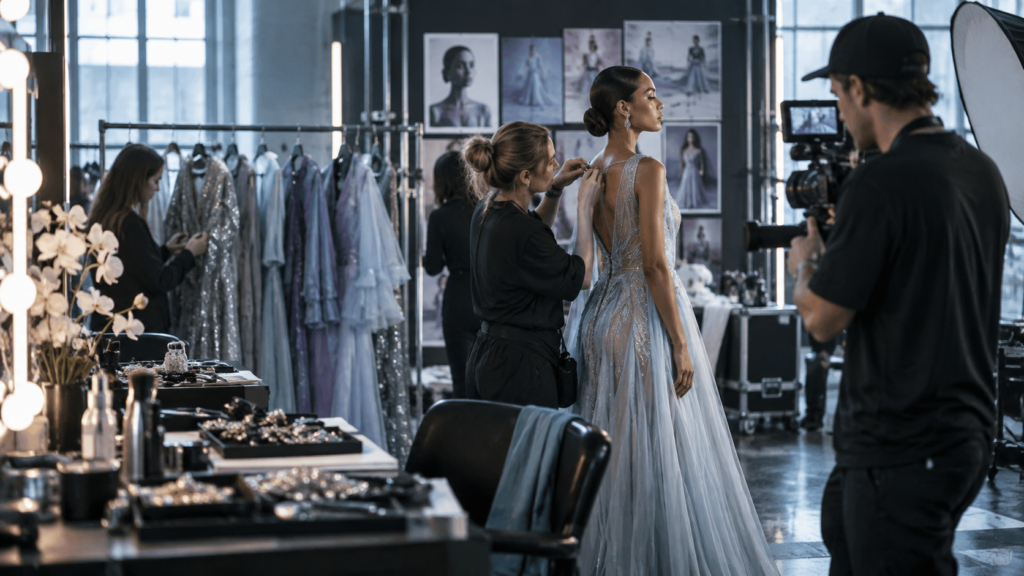
The runway shows the finished world. Backstage content reveals the labour behind it: fittings, makeup references, tailoring details, model preparation, last-minute changes, and the team responsible for making the final image possible.
That access gives audiences a second reason to care. People who are not ready to buy may still become interested in craft, creative direction, or the personalities behind the brand. It also produces useful content that feels less formal than the official show.
The important part is selection. “Behind the scenes” should still tell a story. A random collection of rushed phone clips is not automatically intimate or interesting.
Turn Attention Into Product Interest
Runway excitement can disappear if viewers cannot connect the spectacle to anything tangible. Strong follow-up content identifies hero pieces, explains details, offers styling ideas, opens waitlists, and shows when the collection will become available.
Luxury brands may protect distance and desire, but the audience still needs a path. Smaller brands need that path even more. The cultural moment should lead toward a product page, newsletter, store visit, or future launch—not simply a collection of beautiful posts that earn applause and then vanish.
Design the Capture Plan Before the Event
A content engine needs a capture plan. Before the show, list the assets every channel will require: vertical video, horizontal footage, full looks, detail shots, audience reactions, designer commentary, clean product images, and short interviews. Assign responsibility for each one.
This sounds operational, but it protects the creative idea. Without a plan, the team may discover afterward that the most important garment was never filmed closely, the designer’s explanation is unusable, or every clip was captured in the same format.
Decide which content must publish immediately and which should be held for later. Arrival footage and live reactions lose energy if they appear a week late. Craft stories, styling breakdowns, interviews, and product details can extend the collection for months.
Measure the Life of the Story
The first twenty-four hours show reach, but they do not reveal the full value of Fashion Week marketing. Track saves, shares, press mentions, profile visits, search interest, waitlist registrations, product-page visits, and sales over time. A quiet detail video may create fewer impressions than a celebrity arrival while sending more qualified people toward the collection.
Use the Marketing Metrics Calculator to compare the efficiency of paid and organic campaign activity. Then record which story angles continued earning attention after the show. Those patterns should influence the next launch, not disappear inside a recap deck.
Smaller brands can use the same approach on a simpler scale. Choose one central launch moment, capture it properly, and plan six to ten pieces of follow-up content before the event happens. The engine works because the story is prepared to travel.
Consistency Makes Experimentation Recognizable
Fashion changes constantly, but strong houses remain recognizable. They can change silhouettes, casting, locations, and formats because their identity gives the experimentation a frame.
This is the same challenge explored in Pop Culture’s Influence on Branding: respond to culture without becoming unrecognizable every time the conversation shifts.
Small brands can borrow that principle. You do not need a runway. You need a central creative idea, a build-up, a launch moment, several content perspectives, and a follow-up that turns attention into action.
Build a Content Engine Not a Single Post
Plan what happens before, during, and after the main moment. Capture wide shots and details. Prepare context for people who want the deeper story. Give creators room to interpret. Save the strongest material for follow-up instead of publishing everything within one hour.
The Pop Culture Brand Strategy Playbook can help turn a cultural moment into content without chasing every trend.
Fashion Week marketing works because the show is never only a show. It is a controlled beginning for hundreds of stories—and the audience decides which ones travel furthest.